
44 results in all PRIZ Hub projects

This project showcases how functional modeling can drive innovation by analyzing and simulating various versions of a vacuum cleaner. By studying the functional model, you will experience firsthand how the Functional Modeling creative thinking tool helps identify opportunities for improvement and generate innovative ideas for the next generation of products. Through this example, you’ll learn how to dissect the functionality of a vacuum cleaner, revealing ways to enhance its performance, efficiency, and user experience—ultimately paving the way for future innovations.
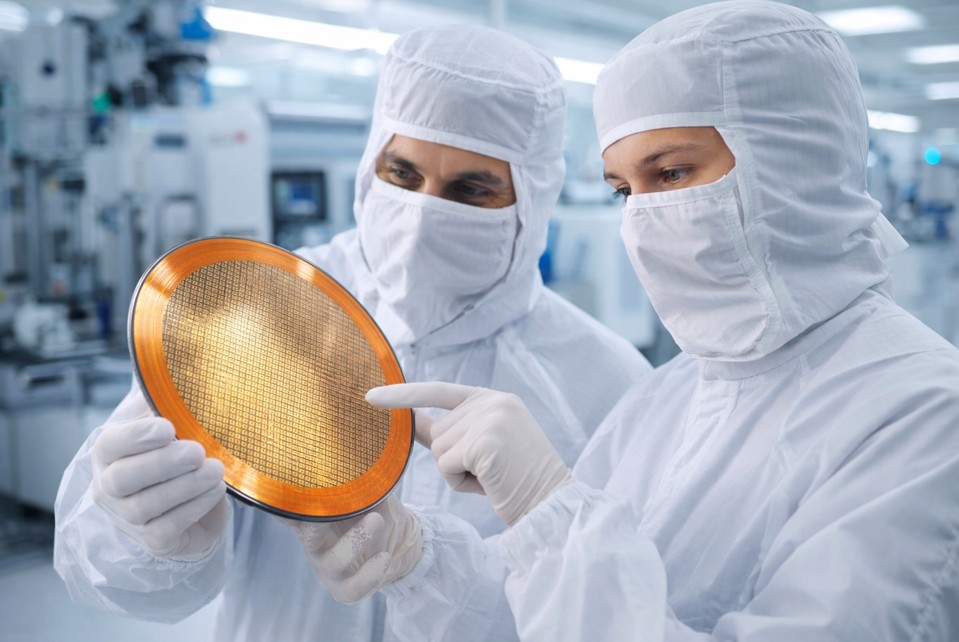
Copper electroplating is essential for forming advanced semiconductor interconnects, yet radial thickness non-uniformity remains a costly challenge. Thicker deposition at the wafer edge and thinner copper at the center force manufacturers to rely on overplating and CMP compensation, increasing material waste and process cost. Using the PRIZ Platform, this project reveals that the true amplification mechanism lies in operating within a kinetically controlled regime, where small voltage variations caused by seed-layer resistance produce large thickness deviations. By shifting the process closer to diffusion-controlled behavior and reducing sensitivity to voltage fluctuations, uniform deposition can be achieved intrinsically — enabling thinner seed layers, reduced overplating, lower CMP burden, and overall cost reduction.
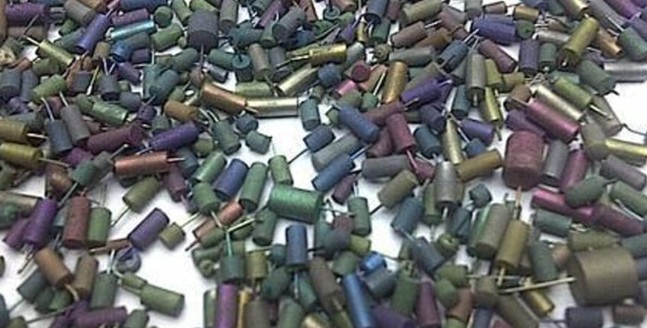
The project addresses instability in the dissolution of tantalum (Ta) anodes in hydrofluoric acid (HF), where hydrogen gas generated during the reaction becomes trapped in the solution, forming foam that disrupts the process and creates safety risks. Using the PRIZ Platform, a Functional Model of the system was developed. The model revealed that the HF solution is both the most functional and the most problematic component, leading to a physical contradiction: HF must interact with Ta anodes to enable dissolution, but must not retain the hydrogen gas produced during the reaction. Applying the PRIZ principle of Separation in Space, two reactor concepts were proposed: a spray interaction reactor, where HF is pumped to spray onto anodes placed above the solution, and a surface wetting reactor, where anodes are positioned at the top of the solution, allowing natural circulation and easy hydrogen release. Both designs eliminate foam formation and provide a stable, controllable, and safer dissolution process.

To reduce high turnover at the plant the managers propose different ideas, but it does not help. All proposed solutions are good, but there are some of them that are blocking the effectiveness of the rest of the solutions. The purpose of the project is to analyze the proposed solutions (perceptions) and define the blocked. The solutions with high blocking rank should be completed first to ensure the effectiveness of the rest of the ideas. The Perception Mapping (PMap) creative thinking tool was used for the blockers definition.
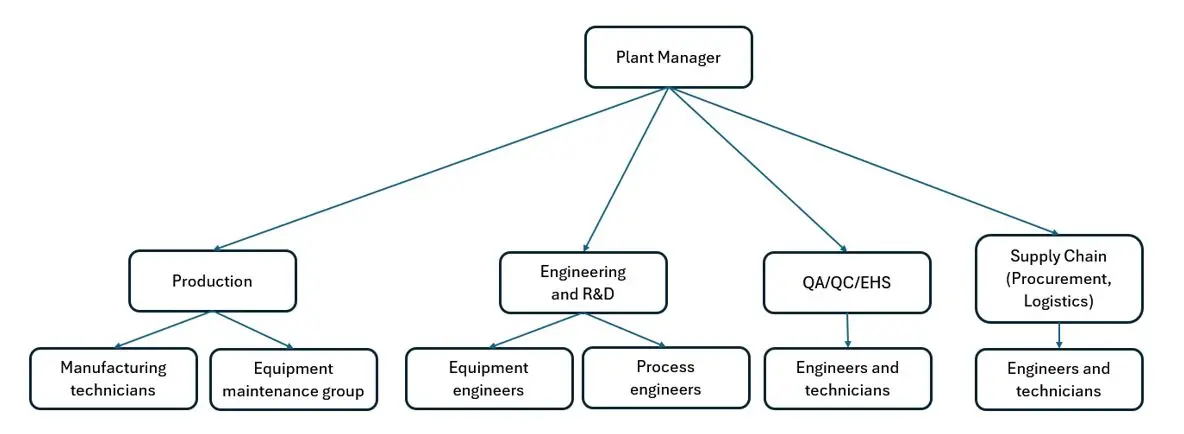
Who is the most important at a manufacturing plant? Do you believe that management is the most important? We created a Functional Model of a typical manufacturing and revealed that Process Engineers are the most functional. So, if you want your production to be successful, invest in process engineers first.